
Grill Gear, Retail-Exclusive BBQ Sub-Brand & Packaging
Ahead of its 2023 season, The Home Depot set out to declutter its in-store BBQ accessories aisle. Online, the retailer carries a wide range of accessory brands, including Dyna-Glo, but store shelves hold only a handful. The goal was a tighter assortment with packaging that looked clean, cohesive, and easier to shop.
To compete for that shelf space, the Dyna-Glo product team at GHP Group proposed two sub-brands exclusive to The Home Depot: Grill Gear and Grill Gear Pro. With the first pitch meeting only weeks away, I had to deliver wordmarks, packaging, and digital content for both lines.
Year
2022
Timeline
3 Weeks
Role
Brand Designer
Packaging Designer
Scope
Wordmark
Sub-branding
Packaging
Digital Content
Pitch Materials
The Sub-Brand
Wordmark System
The sub-brand needed two wordmarks that clearly belonged to one family: Grill Gear for the core assortment, and Grill Gear Pro for premium products at a higher price point.

Digital Content
Product Infographics
To gauge how the sub-brand would sell online, The Home Depot asked to see sample digital content. Working with our digital marketing team, I designed infographics that call out each product's key features.


Packaging
Two-Tier Packaging
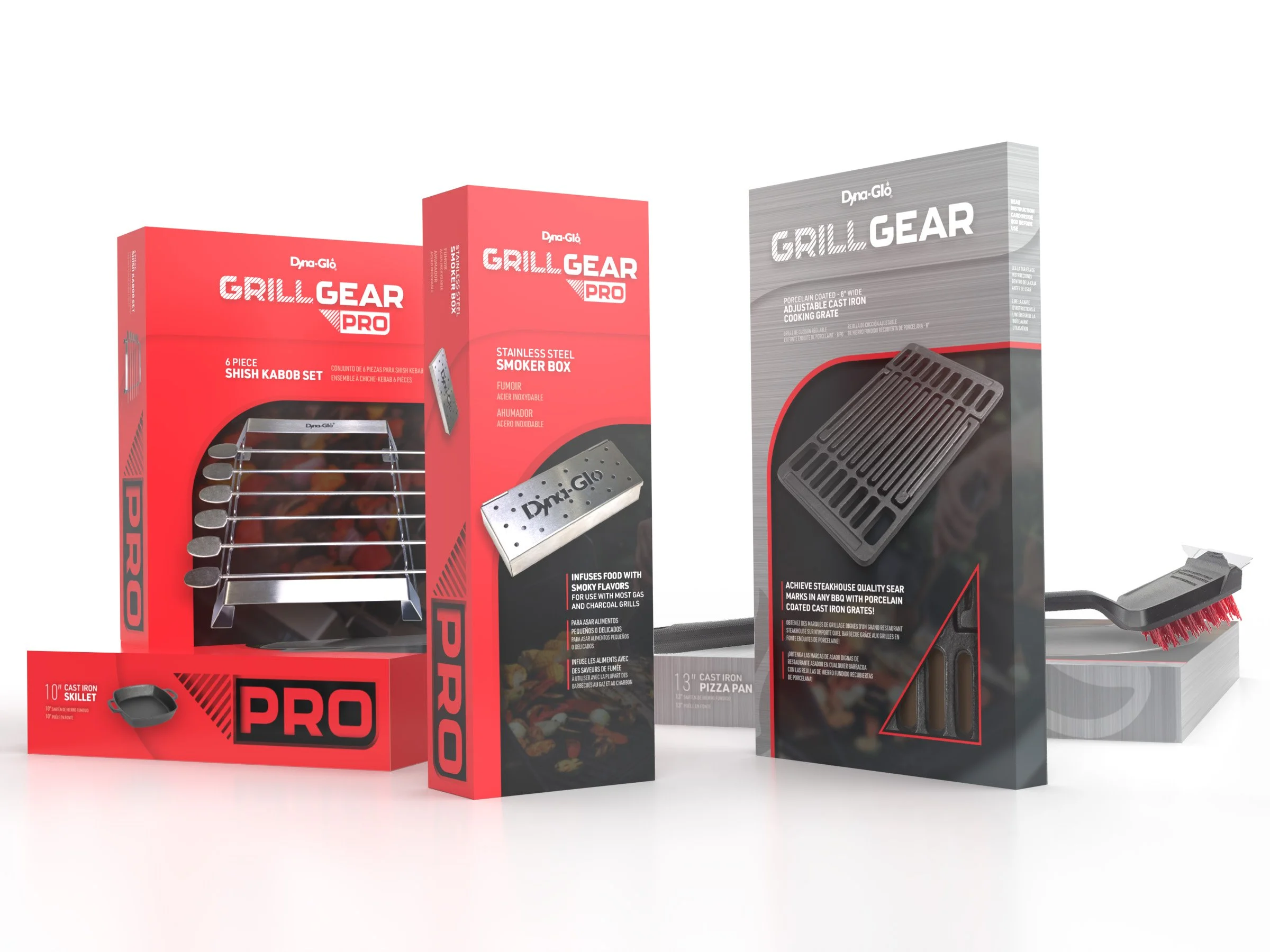
With two product lines, the packaging had two jobs: separate the tiers at a glance, and still read as one brand on a crowded shelf. Both lines share a single structure, and color does the separating.
Grill Gear
The standard line pairs a stainless steel texture with a grey overlay. Red accents framing the lifestyle photography tie it back to the Pro line.


Grill Gear Pro
For the premium line, red moves from accent to base color, so the Pro products pull the eye first. The layout carries over from the standard packaging, and a dimensional "Pro" graphic on the side panel adds depth and signals the step up.


Off the Grill
After three weeks working alongside the sales team to assemble a complete proof of concept, we brought Grill Gear to The Home Depot. The buyers responded enthusiastically to the designs, and the concept moved into the next phase of development.
The constraint that shaped the work: three weeks, two brands, and a buyer who needed to see something that looked shelf-ready, not a sketch. The system had to come together fast and hold up under a retailer's scrutiny on the first look.